When laminating PVC profiles, a decorative film is bonded to the visible surface of the profiles to enhance their appearance but also to make them more resistant to weather conditions. For the lamination to be durable, the adhesive must form a strong bond with the PVC surface. Without suitable surface preparation, this bonding cannot develop its full potential, leading to problems such as film peeling and the formation of bubbles or wrinkles over time. This is where the primer comes into play.
The primer acts as a bridge between the PVC surface and the adhesive. It changes the surface properties of the PVC, makes it more receptive to the adhesive and increases the adhesive strength. The same also applies to powder-coated aluminium profiles for outdoor use. Here is a closer look at how primers work:
Why is precise primer dosing so important?
In general, it is important to conserve valuable resources and prevent avoidable primer wastage with the resulting costs. However, there are other reasons why primers should be applied sparingly and precisely. In film lamination, the primer is dried with a series of fan heaters after it has been applied to the profile surface. Most of the solvent evaporates and the synthetic resins remain on the profile. If solvents are trapped under the decorative film, this leads to the formation of bubbles under the film and thus to complaints.
If too much primer is applied to the profile, this can also impair the adhesion of the adhesive as well as causing bubbles. The adhesive mixes with the primer and can therefore only build up a lower adhesive effect. Depending on the type of primer, excess primer on the profile can also attack the decorative film and lead to material damage. To rule out all these possible problems in advance, it is important to dose the primer precisely to the gram. This is the only way to ensure that it is completely dry before the film is applied.
Automatic primer dosing is essential when using low-VOC primers! This is because these primers contain high-boiling solvents that evaporate more slowly and are therefore more difficult to dry off. It is essential to adhere to the recommended dosing quantities in order to prevent problems caused by excessive primer application. Only an automatic primer dosing system is able to apply low-VOC primers precisely and evenly.
How does an automatic primer application system work?
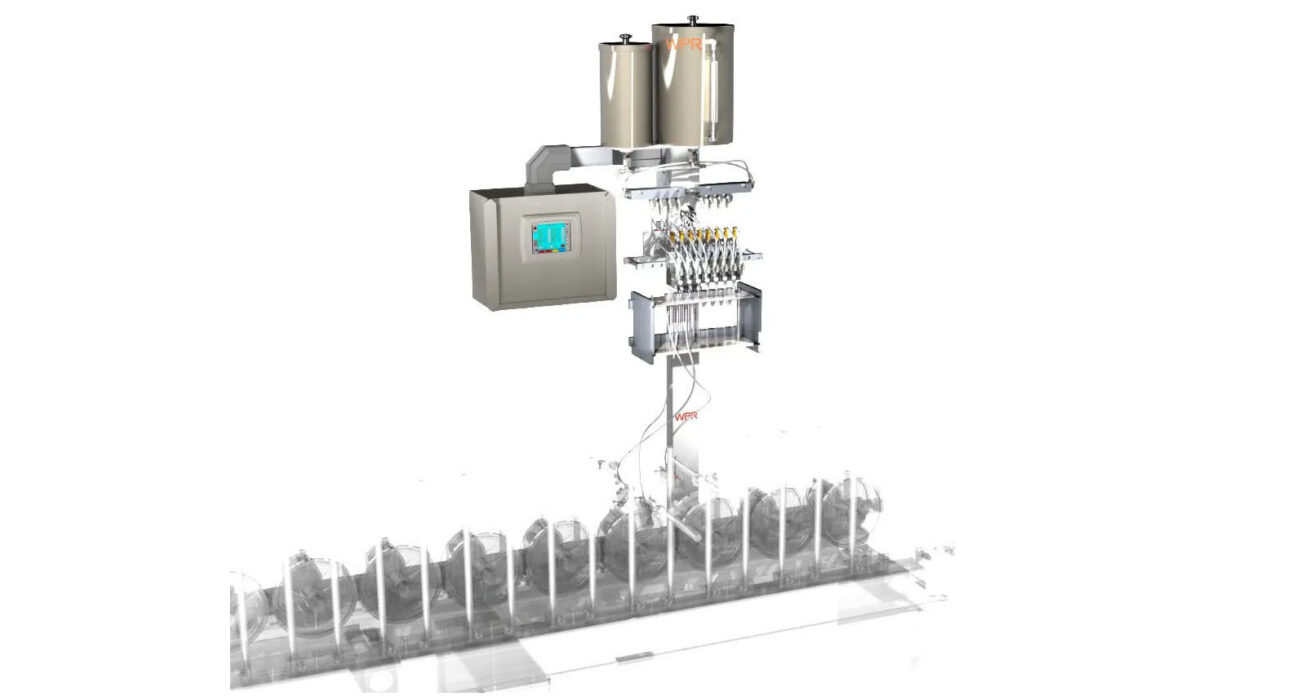
An automatic system for dosing the primer in the profile coating independently calculates the required primer quantity, which is dispensed into the primer felts, from the process parameters such as working speed, felt width and desired application quantity. The dosing of the primer flow into the individual felt sponges is controlled separately and regulated via electromagnetic shut-off valves. This ensures that the exact amount of primer is applied to the profile surface. The primer then runs via primer hoses into the primer felts, which continuously apply the primer to the profile surface in contact with the passing profile. If the working speed changes, the system automatically adjusts the primer dosage.
The system continuously pumps primer from the primer canister into the system’s primer tank via an automatic primer feed. This ensures a constant fill level in the tank and at the same time the system operators do not have to refill the primer manually. This saves time and ensures maximum work safety.
What are the advantages of an automatic primer dosing system?
– Primer savings: automatic primer dosing optimises primer consumption
– Universal primer system: works with all commercially available primers
– Maximum precision: automatic primer dosing accurate to the gram for precise adherence to the recommended application quantities
– Simple setting of the dosing quantities via the control panel
– Separate tank for the cleaner for easy maintenance and cleaning
– Integrated eco mode: Wets the primer felts during work breaks with reduced primer flow to prevent the felts from drying out and save primer
– Simple calibration: integrated procedure for calibrating the dosing system
Simple retrofitting possible on all laminating systems!
The automatic primer dosing system from WPR can be installed quickly and easily on laminating systems of all types, including machines from other manufacturers. All settings can be made clearly via the integrated user control panel and the speed sensor guarantees drip-precise primer dosing even at varying operating speeds.
Retrofitting an automatic primer application system is particularly useful when production is switched from conventional, low-boiling primers to high-boiling, low-VOC primers. However, investing in an automatic dosing system is worthwhile in any case. This saves valuable resources and ensures consistent quality in lamination.
Contact us now using the contact form below and we will show you the advantages of an automatic primer dosing system.
For low-VOC Primer